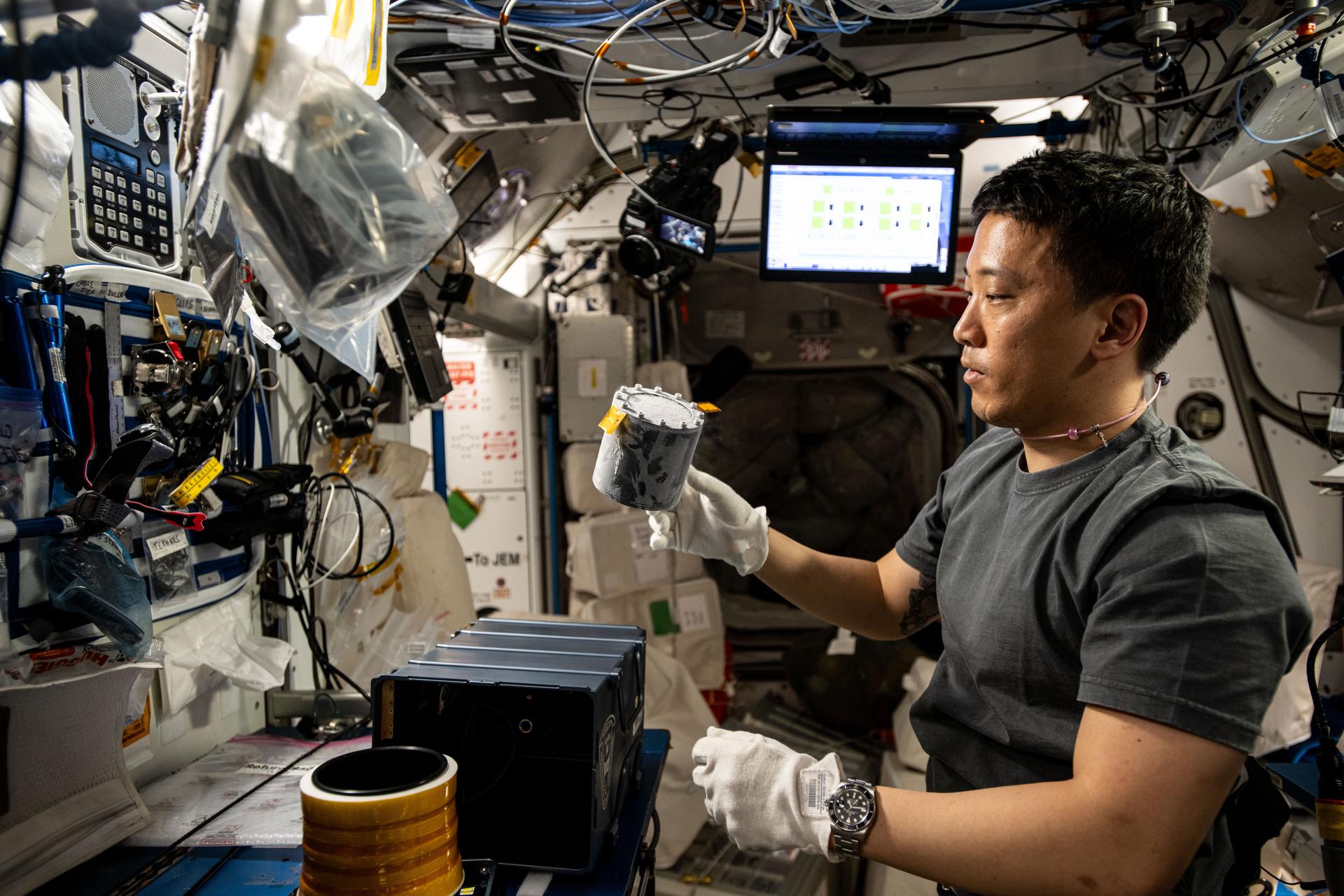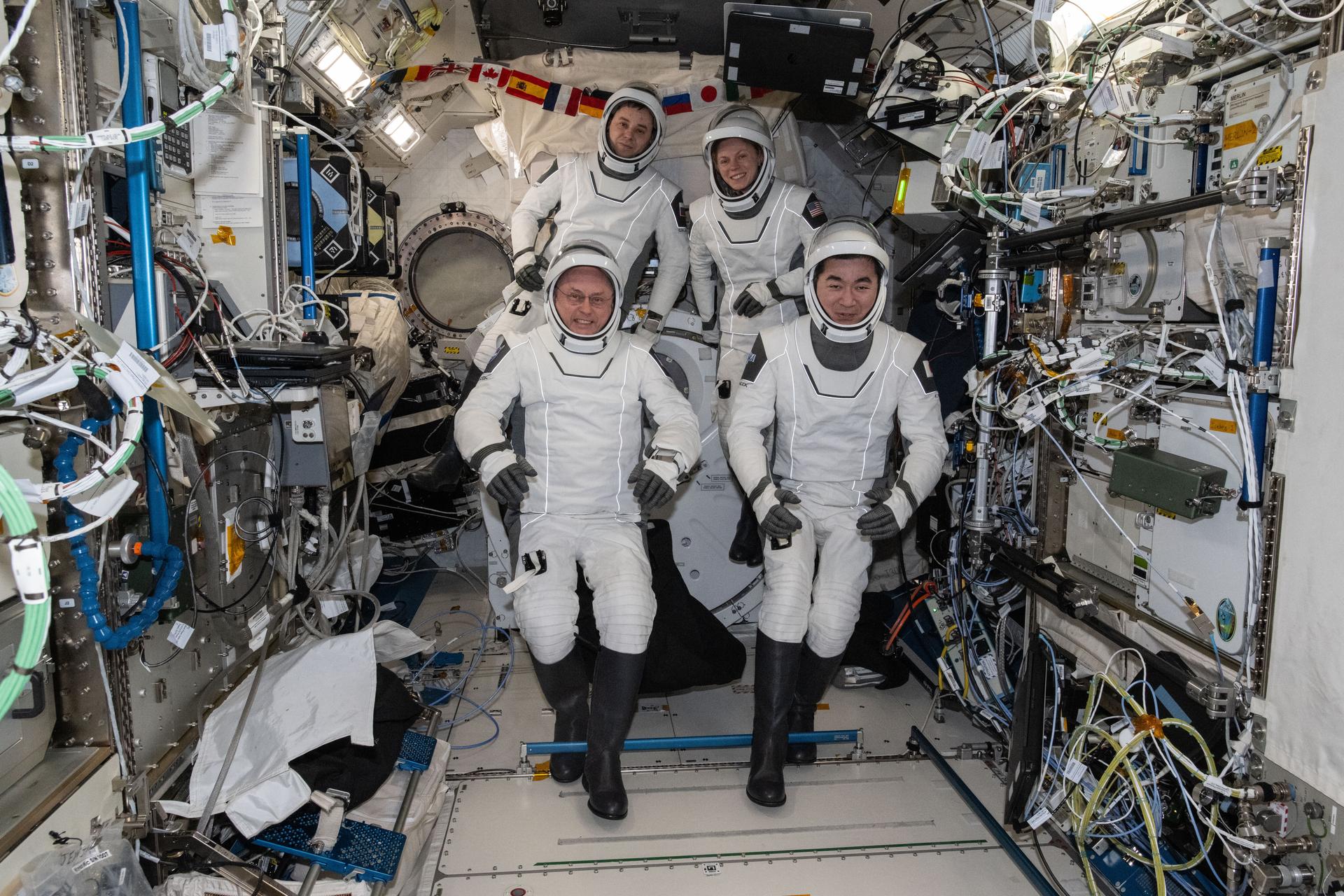
NASA’s Johnson Space Center brought the International Space Station’s 25-year legacy to the public on Jan. 24, 2026, during a community day event in Houston.
Johnson’s visitor center, Space Center Houston, hosted the celebration commemorating 25 years of continuous human presence in space.
For a quarter century, astronauts have lived and worked aboard the orbiting laboratory, advancing science, strengthening international partnerships, and shaping the future of exploration beyond low Earth orbit.
The event featured interactive exhibits, special videos in the museum’s theaters and at each activity station, and hands-on demonstrations highlighting how the space station continues to benefit life on Earth and prepare NASA for missions to the Moon and Mars.
Johnson employees shared information about the agency’s current missions aboard the orbital outpost and how that research is helping prepare for future Artemis missions, including Artemis II’s upcoming journey around the Moon.
Space fans received a “Go for Launch” card and received a stamp as they completed activities at the three NASA stations to earn their choice of prize, either a space station activity book or a 2026 space station calendar. Volunteers also handed out pins and stickers at tables once guests completed the challenge at their station.
At one exhibit, participants assembled a space-themed puzzle while wearing gardening gloves, demonstrating the limited mobility astronauts face when completing tasks during a spacewalk. They then had the chance to see and hold a spacesuit glove used during spacewalk training.
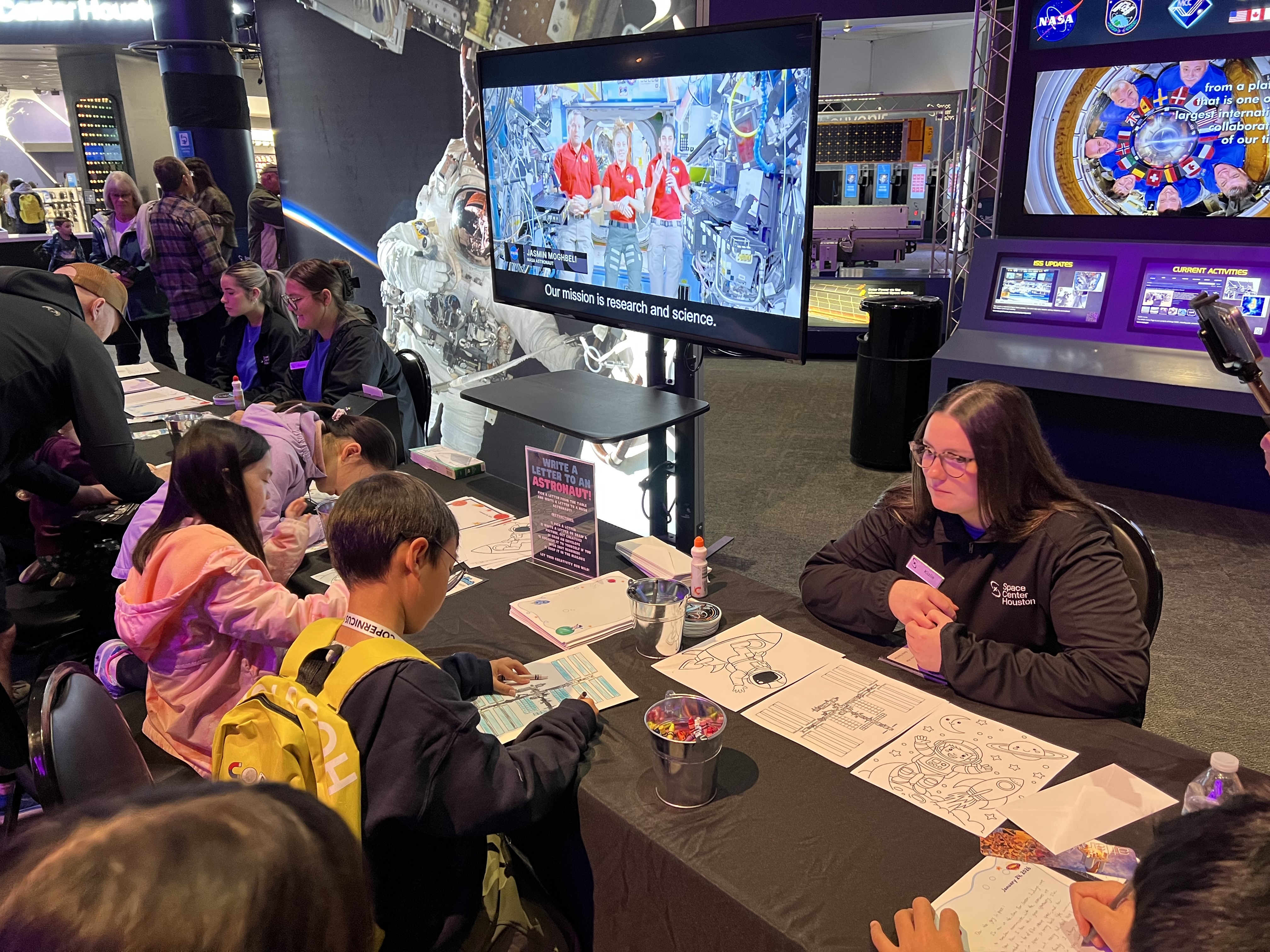
At another station, attendees could color photos or write letters to the NASA astronaut corps, thanking them for their dedication to the mission and sharing their aspirations of one day supporting human spaceflight. They even got to drop it in a “mailbox” for delivery.
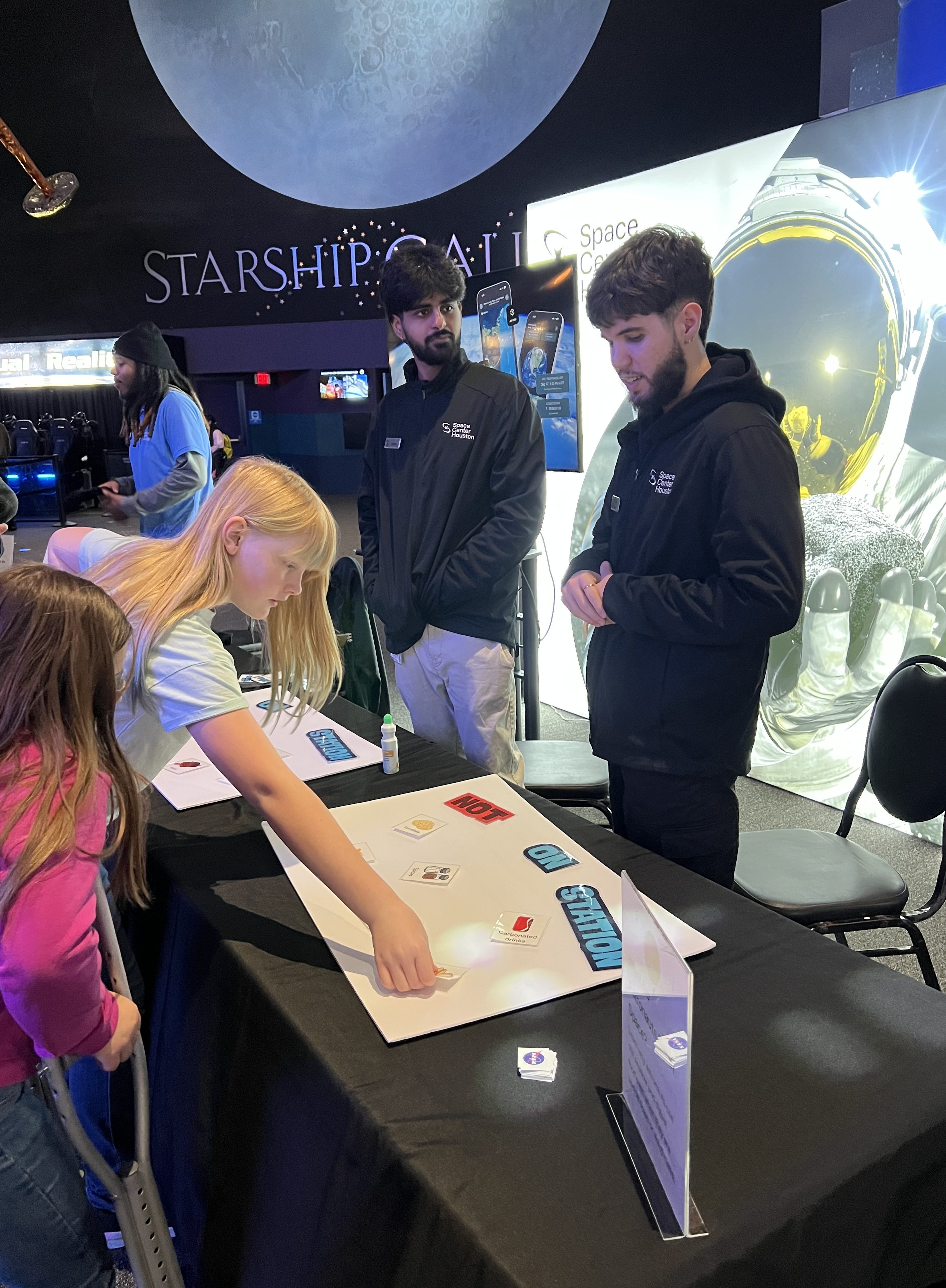
A third booth invited guests to explore real space food and featured a nutrition challenge to identify what astronauts can and cannot eat in microgravity. Another activity at this station highlighted how the human body digests food in space. On Earth, gravity helps move food through the digestive system. In orbit, digestion relies almost entirely on peristalsis, the wave-like muscle contractions that push food through the esophagus and intestines. Without gravity, the process still works but can be slower, as muscles gently squeeze and push food through the digestive tract on their own.
These hands-on experiences demonstrated how research aboard the space station continues to shape the future of exploration. After 25 years of continuous habitation, the station remains essential to humanity’s next giant leaps.