3 min read
Curiosity Blog, Sols 4818-4824: Thinking Out of the Boxwork

Written by Ashley Stroupe, Operations Systems Engineer at NASA’s Jet Propulsion Laboratory
Earth planning date: Friday, Feb. 27, 2026
This week we had three planning sessions, exploring the eastern side of the boxwork unit. As a Rover Planner on Monday, I worked on the arm and drive activities, while on Friday I served as the Engineering Uplink Lead (planning all of our engineering activities like heating and managing our onboard data). We had two small drives this week to put different targets into our workspace for each plan. The months-long careful and systematic investigation of the boxwork unit will hopefully provide the science team insights on what was going on in this area of Mars that resulted in this interesting and unique terrain. As we wrap it up, we are already thinking ahead to our future investigations of the sulfate unit, where we will be heading after finishing here and continuing our climb up Mount Sharp.
With three plans and short drives, we were able to do a total of 19 Mastcam stereo mosaics, getting a full 360-degree panorama as well as additional documentation of the nearby ridges/hollows and the nearby sulfate unit. Some of the rocks in the hollows show a return of the polygonal structures that we saw in abundance prior to entering the boxwork unit, but have only seen sparsely in other hollows. As we are entering deeper into the warmer months, the start of dust-storm season, we have also been doing a lot of atmospheric measurements. We did multiple observations of the crater rim (to watch it fading into the haze), Mastcam solar Tau measurements (looking at the Sun to measure dust in the atmosphere), dust-devil movies, and other sky observations.
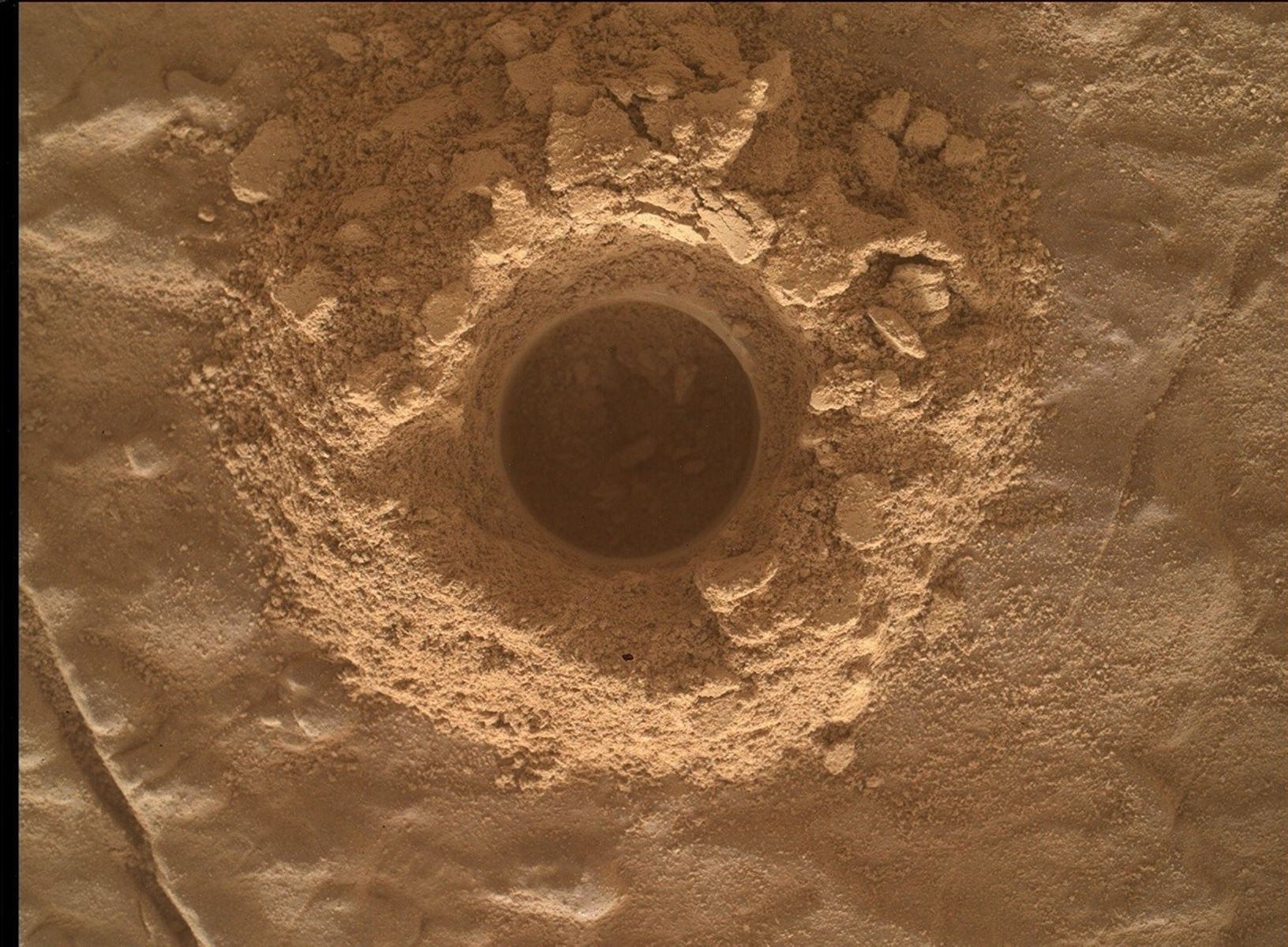
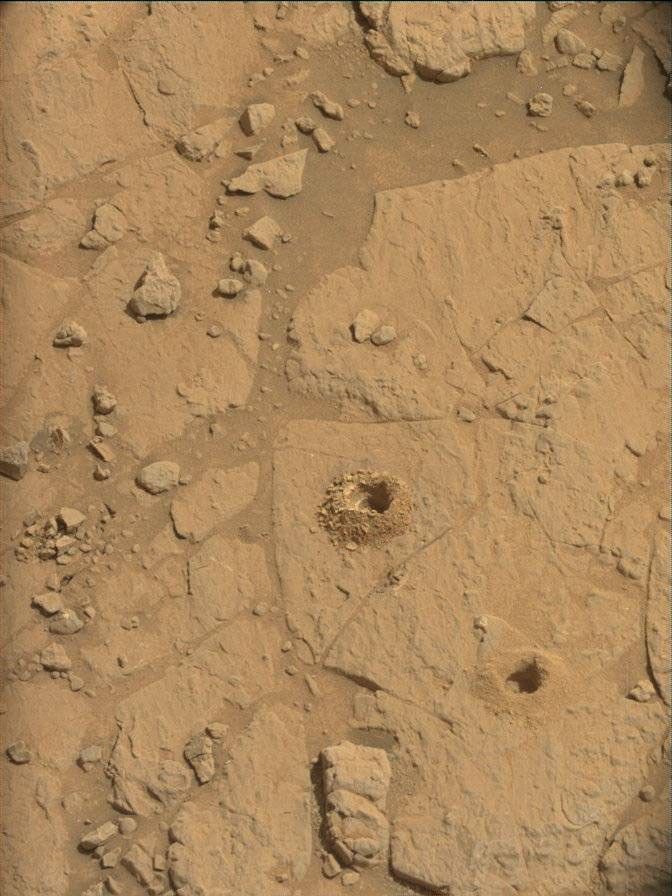
We investigated a total of four targets with MAHLI and APXS, two of which we were able to brush. The accompanying image shows the APXS down on one of the targets near the contact. Most of the targets were not very complicated for the Rover Planners because the rocks have been mostly smooth and flat. But our Wednesday target, “Los Monos,” was slightly under the front of the rover, and we had to do some additional intermediate arm motions to reach underneath safely. We won’t actually know if today’s targets are on the other side of the contact (in the sulfate unit) or not until we can study the data.
Planning the short drives has been interesting, as with most of the boxwork unit drives, because we must navigate around the sand and steeper slopes in hopes of minimizing slip. In this weekend’s plan our drive will head south towards the southern end of the boxwork unit, where the terrain smooths out a bit and driving should be easier.