
Western Europe got its first hint of an unusual summer in May 2026, when a heat dome produced exceptional temperatures that shattered records in several countries. Remarkable as it was, that early heat wave turned out to be only the opening salvo.
By mid-August, Europeans were sweating through their fifth heat wave of the season, with the latest onslaught pushing temperatures well above 40 degrees Celsius (104 degrees Fahrenheit) across a broad area. During these bouts of extreme weather, high temperatures were often unrelenting, persisting for several days and sometimes weeks on end, and remaining overnight.
For a region accustomed to relatively mild summers, the heat upended everyday life. Hospitalizations and heat-related deaths spiked. Highways and train tracks buckled, forcing road closures and service disruptions. Large and destructive wildfires raged in areas where they were once rarely seen. The heat also worsened the severe drought that has gripped the region for months, contributing to record-low river water levels and disrupting water and power supplies, transportation routes, and agriculture.
The animation above shows the daily maximum surface air temperature across Western Europe from May 1 to August 19, 2026. It was produced by combining satellite observations with temperatures predicted by a version of NASA’s GEOS (Goddard Earth Observing System) global model, which uses mathematical equations to represent physical processes in the atmosphere. The darkest red areas indicate where temperatures met or exceeded 40°C.
The heat broke records at a furious pace, often by wide margins. According to the UK Met Office, temperatures soared as high as 35.1°C (95.2°F) in London on May 26, smashing the previous May record by 2.3°C (4.1°F). In June, Bordeaux, France, broke its maximum-temperature record on three consecutive days, hitting 42.5°C on June 24, Météo-France reported. Slovakia, meanwhile, set new national records for both daytime and nighttime highs in August. Combined June and July temperatures in Western Europe were the highest on record, according to Europe’s Copernicus climate monitoring service.
In Europe, extreme temperatures collided with several vulnerabilities, including limited access to air conditioning, high nighttime temperatures, and a lack of green space in some cities. The circumstances triggered not just discomfort but heat exhaustion and heatstroke in some cases. Preliminary reports suggest that heat may have been associated with 10,000 excess deaths, including thousands of people in the UK, France, Germany, and Belgium.
“Air conditioning is an especially critical issue in Europe in the short term,” said Anamika Shreevastava, a researcher at New York University who studied urban heat islands as a postdoc at NASA’s Jet Propulsion Laboratory. One of her goals was to produce thermal maps based on NASA data from missions like ECOSTRESS that city planners could use to make cities more resilient to heat waves.
International Energy Agency data show that 23 percent of homes in Europe have air conditioning, compared to 90 percent of homes in the United States. That difference contributes to the much higher death rates that researchers have documented in European cities during heat waves than in comparable American cities. “Longer term, cities can also plant trees, expand parks, use reflective roof paint, and transition to building materials less likely to retain heat,” Shreevastava said.
An analysis from the World Health Organization indicates that heat stress is the world’s leading cause of weather-related deaths, noting it exacerbates underlying illnesses, including cardiovascular disease, diabetes, mental health conditions, and asthma. Researchers have calculated that roughly 489,000 heat-related deaths occur each year, with 45 percent of the deaths in Asia and 36 percent in Europe.
“For older adults with physical health problems, temperatures as low as 26.7°C (80°F) can pose significant danger,” said Deborah Carr, a Boston University sociologist who specializes in the study of aging. “Nighttime heat is especially harmful for older adults whose homes lack air conditioning.”
Carr is part of a research team that used demographic data, along with temperature and climate data archived by NASA, to identify which parts of the world are at the greatest risk of current and future heat exposure. Southern Europe was among the areas facing growing heat exposure and an aging population, the researchers found.
Other research, published in Lancet Planetary Health in August 2026, underscores the importance of demographics in assessing the risks posed by heat. This study, led by Stanford researcher Qinqin Kong, mapped where increasing heat is likely to lead to intolerable conditions in the coming decades for young, middle-aged, and older adults, concluding that safe thresholds will be breached often and widely, with risks falling disproportionately on older people.
“The human body can tolerate only a limited range of ambient heat,” said Kong, a recipient of a NASA Earth and Space Science and Technology award. “Understanding where, when, and to what extent these limits are exceeded is critical.”
With intolerable levels of heat expected to affect more people across larger regions and for longer periods than previously thought, Kong and his colleagues hope that their findings will inform targeted heat action plans, emergency preparedness, and health system planning.
NASA Earth Observatory image by Lauren Dauphin, using GEOS-FP data from the Global Modeling and Assimilation Office at NASA GSFC. Story by Adam Voiland.
References & Resources
- AP (2026, August 10) UK and France prepare for another heat wave as western Europe sets new temperature record. Accessed August 20, 2026.
- Copernicus Climate Change Service (2026, August 12) Exceptionally hot and dry conditions fuel wildfires in Europe as ocean surface temperatures reach record highs for July. Accessed August 20, 2026.
- Copernicus Climate Change Service (2026, July 9) Record heatwave brings hottest June for western Europe during second-warmest June globally. Accessed August 20, 2026.
- Falchetta, G., et al. (2024) Global projections of heat exposure of older adults. Nature Communications, 15, 3678.
- Kong, Q., et al. (2026) Exceeding human heat tolerance in a warming, ageing world: a global projection modelling study. The Lancet Planetary Health, In press.
- Met Office (2026, June 17) May 2026 temperature records verified. Accessed August 20, 2026.
- NASA (2025) Global Temperature – Earth Indicator. Accessed August 20, 2026.
- NASA Earthdata (2022) Training: Satellite Remote Sensing for Measuring Urban Heat Islands and Constructing Heat Vulnerability Indices. Accessed August 20, 2026.
- NASA Earthdata, Heat. Accessed August 20, 2026.
- The New York Times (2026, August 14) Europe Is Once Again in the Grip of a Heat Wave. Accessed August 20, 2026.
- Reuters (2026) Tracking Western Europe’s heatwave. Accessed August 20, 2026.
- World Meteorological Organization (2026, August 12) Record-breaking heat and extreme weather continue. Accessed August 20, 2026.
- World Resources Institute (2026, June 30) Europe’s Soaring Heat and the Great Air Conditioning Dilemma. Accessed August 20, 2026.
You may also be interested in:
Stay up-to-date with the latest content from NASA as we explore the universe and discover more about our home planet.
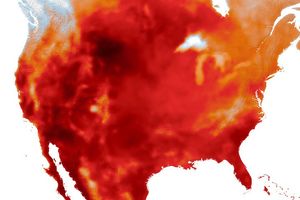
A ridge of high pressure fueled record-breaking temperatures in Montana, Utah, and Wyoming on July 12, 2026.

New animations from NASA’s PREFIRE mission reveal two years of seasonal temperature swings at the Arctic and Antarctic.
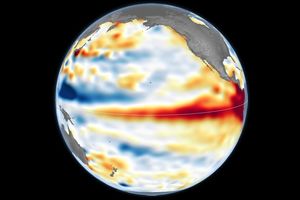
Satellite observations of sea surface height indicated that the 2026 event continued to strengthen in early June.